"The beginning of Hallyu is Vietnam."
In September 2003, Hanwoo Chang, a public relations officer at the Republic of Korea Embassy in Vietnam, wrote an article titled "The Hallyu phenomenon in Vietnam" to analyze the then-popular Hallyu phenomenon in Vietnam and its causes. A notable point in this article is "Korean residents in Vietnam frequently assert that Vietnam is the origin of Hallyu."
The term "Hallyu" was first used by Taiwanese media in 1997. Its widespread use by Chinese media established it as a term for "the enthusiastic preference for Korean popular culture in foreign countries." Therefore, it is generally perceived that Hallyu began in the Chinese-speaking world and then spread to ASEAN and the Middle East. However, Korean residents in Vietnam at the time disagreed. This was because Vietnamese people had liked Korean culture even before the term "Hallyu" was coined in China. Vietnamese people felt a sense of familiarity and kinship with Koreans and Korean culture, feeling a sense of shared identity due to similarities between the two cultures. The popularity of Korean culture and products in Vietnam, which Korean residents in Vietnam claimed, was not without basis, as it had continued for hundreds of years.
Popularity of culture and products for hundreds of years
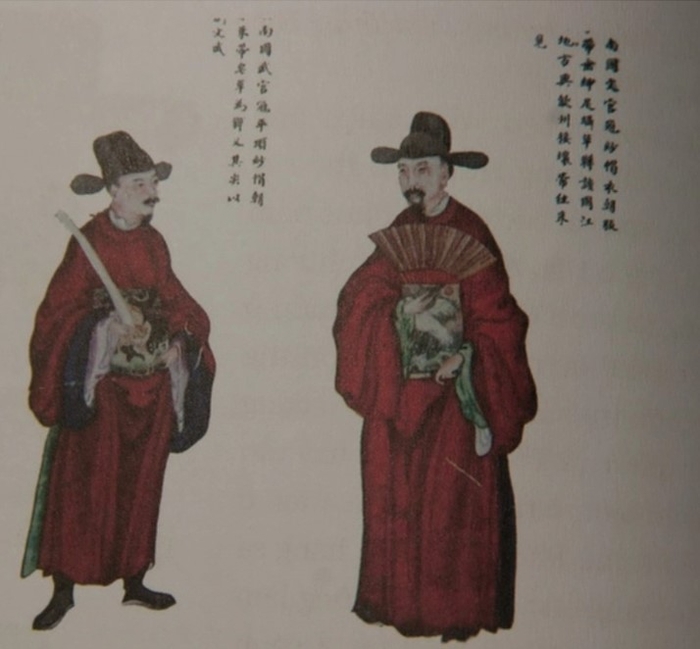
Professor Choi Byung-wook of Inha University's "Korean and Vietnamese envoys meeting in Beijing" and Professor Park Hee-byeong of Seoul National University's "Korean intellectuals in the late Joseon Dynasty and Vietnam" discuss the stories of Korean and Vietnamese envoys who met in Beijing during the Ming and Qing dynasties in the late 16th century. Korean and Vietnamese envoys, who shared the same Chinese cultural background, exchanged information about each other's political situations and exchanged poems to build friendships. In particular, Lee Soo-gwang, a pioneer of the Korean Silhak school, wrote "Records of Dialogue between Korean and Vietnamese Envoys in Beijing" (Annangguk Sasinchang Waman-dap-rok) after visiting Beijing as a Ming Dynasty envoy in 1597, introducing Vietnam to Korea. Lee Soo-gwang also included various information about Vietnam in "Jibong Yuseol," a highly praised first Korean encyclopedia.
Phung Khac Khoan (Phong Cac Khoan), a Vietnamese envoy who befriended Lee Soo-gwang in Beijing, was a highly respected politician and scholar in Vietnam at the time. Even today, there is a high school in Hanoi named after him. It is said that when he returned to Vietnam as an envoy, he introduced Lee Soo-gwang's poems to Vietnamese upper-class society, making them very popular. This was later revealed by Cho Wan-byeok, the first Korean to visit Vietnam three times. When Cho Wan-byeok arrived in Vietnam, Vietnamese officials proudly showed Lee Soo-gwang's poems, welcoming Cho Wan-byeok as a Korean person like Lee Soo-gwang. At that time, Lee Soo-gwang was a "Hallyu star" among Vietnamese intellectuals.
There is no doubt that ginseng was Korea's first Hallyu product. Records show that ginseng was exported to Tang Dynasty from the Three Kingdoms period over 1500 years ago, and during the Goryeo Dynasty, it was exported to the Middle East through the international trading city of Byeolran-do. Professor Choi's other paper, "Korean Ginseng in Vietnam in the First Half of the 19th Century," documents the historical fact that ginseng taken to Beijing by envoys was introduced to Vietnam. Korean ginseng, given as a gift to the Chinese emperor and smuggled into Vietnam from China, was used as a special gift from the Vietnamese emperor to his officials. Kang Jang-hwan, who visited China as a Qing Dynasty envoy in 1760, wrote "Bukwonrok" (Records of the Northern Expedition) in diary form, which includes a passage about Vietnamese envoys requesting ginseng with great eagerness, demonstrating the high popularity of ginseng in Vietnam. A paper titled "Ginseng of Louis XIV" by Dr. Lee Hye-min of New York University's Department of Anthropology states that a Siamese (Thai) delegation visiting France in 1686 presented ginseng to Louis XIV. Since ginseng is not cultivated in Thailand, it is presumed that they indirectly imported Korean ginseng through China and spread it to France. Through Jesuit missionaries, France consistently collected ginseng from Vietnam, Cambodia, and Laos, and used the East India Company to purchase large quantities. In the modern era, there were dozens of Koreans who traveled around ASEAN countries such as Vietnam, Singapore, and Indonesia, trading ginseng from the 1910s. According to data compiled by the Joseon Governor-General's Office in 1938, there were 54 Koreans living in Vietnam, including a Korean resident in Haiphong, northern Vietnam, who became wealthy through ginseng trade, demonstrating the immense popularity of Korean ginseng in Vietnam.
Popularity of Korean dramas and music after the 1990s
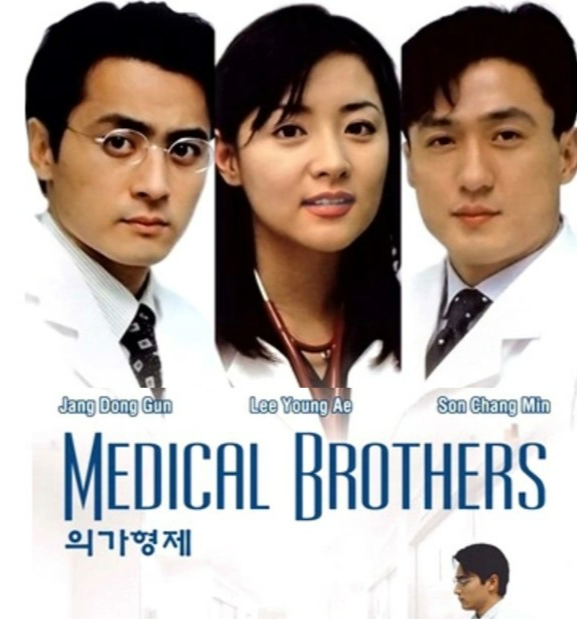
After the Vietnam War ended in 1975, Korean residents largely withdrew, but the implementation of reform and opening-up policies in Vietnam in the late 1980s and the subsequent entry of Korean companies in the 1990s led to the popularity of Korean dramas in Vietnam. The Korean Cultural Center, in an effort to promote Korean culture, provided Korean drama copyrights to Vietnamese broadcasting stations free of charge. Korean companies also provided dramas at a very low cost or for free, maximizing the effect by securing advertisements at the beginning and end of the drama broadcasts. In 1996, "Kim Jan-hwa" was the first Korean drama broadcast on HTV (Ho Chi Minh City TV), marking the beginning of the Korean drama boom. According to Professor Lee Han-woo's 2002 paper "Hallyu in Vietnam: Its Formation Process and Socioeconomic Effects," "Neukkim" (Feeling) in 1997, "My Beloved Youmi," "Brothers of Righteousness," and "Son and Daughter" in 1998 were popular. The following year, "Love in Your Arms," "Stars in My Heart," and others were broadcast, with 45 Korean dramas broadcast in Vietnam in 1999 and 60 in 2000. Korean dramas were broadcast on Vietnamese TV almost daily.