
On November 24, Vietnamese media reported the indictment of Van Thinh Phat Group chairman, Van Thinh Phat, for embezzling 304 trillion Vietnamese dong (approximately 16.4 trillion won). In October 2022, Truong My Lan, chairman of the Van Thinh Phat Group, was arrested for issuing illegal bonds. She and her associates are accused of obtaining fraudulent loans through 1,000 ghost companies at Saigon Commercial Bank (SCB), where they were major shareholders. 304 trillion Vietnamese dong is an astronomical amount, equivalent to 5% of Vietnam's GDP. This incident prompted the Vietnamese financial authorities to conduct a high-intensity investigation into corporate bad loans, leading to the arrest of several construction and food company chairmen. While the central government's decisive action to crack down on illegal activities was clear, it also led to a credit crunch as loans to real estate development and construction companies were suspended.
As loans became difficult to obtain, the share prices of numerous construction and real estate development companies, including Nova Land, Vietnam's fourth-largest construction company and Ho Chi Minh City's largest, plummeted by over 70% and were on the verge of bankruptcy. In the first half of 2023, over 1,200 real estate development projects nationwide were suspended, totaling 800 trillion dong (approximately 43 trillion won). Alarmed, the Vietnamese government reduced interest rates by 1% on March 15, and then by an additional 0.5% just 15 days later. Subsequently, interest rates were reduced by 0.5% again in May and June. This amounted to a drastic 2.5% reduction in interest rates in just three months.
Real estate developers, facing a crisis, offered discounts of 30% to 50% on unsold properties to try to clear inventory. Some construction companies even offered to exchange some of the discount amount for company shares or negotiate to exchange unpaid debts for real estate projects that had been suspended. According to an August report by the Vietnamese daily Tuoi Tre, 21% of all bank loans in Vietnam at the end of 2022 were related to real estate, and banks also began selling collateral assets to address non-performing loans. To revive the construction industry, the Vietnamese government abolished plans to increase taxes on non-agricultural land acquisition, multiple-home ownership, and transfer taxes.
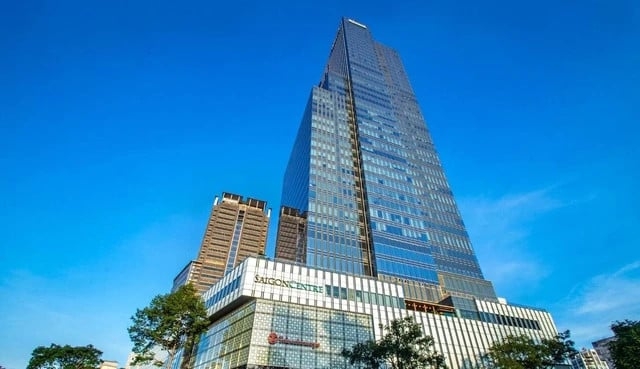
With the crisis in Vietnam's construction industry creating an abundance of attractive and inexpensive properties, foreign investors are aggressively purchasing Vietnamese real estate. The Vietnamese daily Tuoi Tre reported that Singapore's real estate investment and development company Keppel Land, Frasers Property, Thailand's largest real estate developer WHA Group, and Thailand's largest retail company Central Retail Group are actively pursuing M&A of residential, commercial, and industrial projects, either completing or continuing negotiations. Keppel Land, which entered Vietnam in 1992, has Temasek, a Singaporean sovereign wealth fund, as its largest shareholder, with a 20% stake. According to its annual report, as of the end of 2022, its total investment portfolio was approximately 123 billion USD, with 12.4% of that invested in Vietnam, totaling 15 billion USD (approximately 2 trillion won).
Keppel Land, seeing attractive price drops in Vietnamese real estate, acquired a 49% stake in a project with a total development cost of 443 million USD, including land, for 138 million USD (approximately 180 billion won) in March. In July, it invested 512 million USD (approximately 67 billion won) in a shopping mall project scheduled for completion in 2025. Keppel Land is reportedly still negotiating the acquisition of various projects. In interviews with Nikkei Asia in March and November, Keppel Land CEO Loh Chin Hua stated that "we have been divesting Chinese assets since 2017, and Vietnam is part of our China Plus One strategy, where we are exploring opportunities in real estate, data centers, and waste-to-energy." Several experts from Korean construction companies and investment advisory firms that have been operating in Vietnam for over 10 years said, "Capital fleeing Hong Kong is being heavily invested in Vietnam through Singapore," and "Chinese capital is aggressively negotiating to acquire real estate at favorable terms by the end of the year."
 The Appeal of Vietnamese Real Estate](/data_column/weekly.khan.co.kr-2-23/data_3.jpg)
In a report published on its website on July 18, global credit rating agency Fitch assessed that "Vietnam has overcome the critical stage of the real estate issue" and that "the Vietnamese government's efforts to curb financial bubbles in the real estate sector have stabilized the market." It also positively evaluated the Vietnamese government's response, stating that "partially improved transparency and policies addressing the issue could lead to an upgrade in the country's credit rating in the future." The credit rating of BB, assigned to Vietnam in May with a positive outlook, is considered robust, and the real estate issue is not expected to affect Vietnam's credit rating.
In a Reuters report on October 27, Jean Xavier, head of Southeast Asian corporate ratings at S&P Global, also stated that "the risk of further large-scale expansion of the Vietnamese real estate issue is no longer significant." Xavier analyzed that while Vietnamese real estate loans account for approximately 25% of the total, primarily through mortgages, the robust Vietnamese employment market mitigates the risk of defaults. Addressing concerns that Vietnam might follow the path of China's major real estate developers, such as Evergrande, Wanda, and Country Garden, which faced bankruptcy risks, Xavier stated, "Vietnam's real estate supply is not as oversupplied as China's."