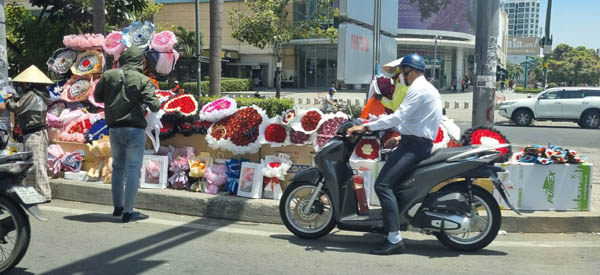
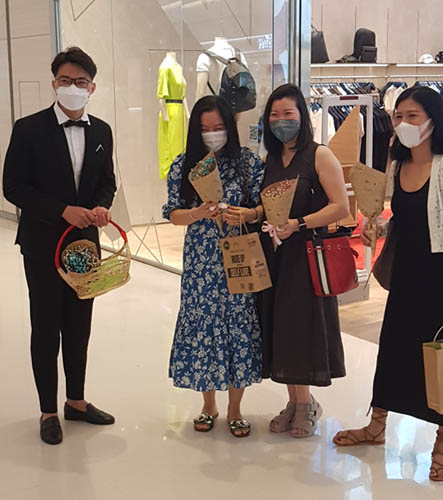
On March 8th, International Women's Day, streets across Vietnam are bustling with vendors selling flowers and people buying them. Bakeries are packed with office workers buying cakes for the women's day celebration held in the office early in the morning. Company CEOs dress up as movie characters to entertain female employees, and give roses to all female employees. Lunchtime restaurants are filled with company employees who have gathered for a celebratory meal to commemorate Women's Day. Shopping malls and department stores are giving roses to female customers and are holding various discount promotions and gift card giveaways based on purchase amounts. In this way, March 8th is a major event for the entire Vietnamese retail industry. However, International Women's Day in Vietnam is not simply a day of consumerism where gifts are given to women.
Vietnamese Women Heroes
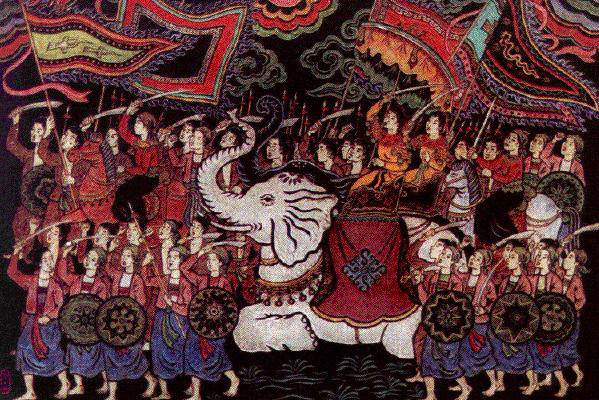
One of the reasons why Vietnam is believed to develop is the 'Vietnamese women'. Vietnamese history has many female heroes who have lived their lives independently and actively. The heroes who led a popular uprising against the later Han Dynasty of China and founded the first independent nation in Vietnam were the Trung Trac and Trung Nhi sisters. When these two women carried out their historical deeds, the heroes who fought alongside them against the Chinese army were 36 female generals and a female archer unit that made the enemies tremble. The name Hai Ba Trung, meaning "The Two Trung Ladies", is given to streets in major cities across Vietnam. This is to commemorate these two female heroes, who are not just legends of a matriarchal society.
There are countless other female heroes in Vietnam. Nguyen Thi Minh Kay, who dedicated herself to the country during the war of independence against France; Vo Thi Sau, who, at the age of 17, was a martyr in the armed independence movement around the same time as Yu Gwan-soon; and Nguyen Thi Dinh, who rose to the position of Vice President of the country. Schools and streets named after them are located throughout Vietnam.
Throughout history, women and children are mostly victims of war. Even if women participate in war, they mostly play a role in supplying and supporting. Vietnamese women fought alongside male soldiers and led the war to victory. Records of the war displayed at the Vietnam Museum show many female soldiers aiming their guns alongside male soldiers. In the Hanoi War Museum, you can see a female warrior dragging captured wreckage of a downed US fighter jet, like a hunted prey. This vividly demonstrates the resilience of Vietnamese women.
Vietnamese national hero President Ho Chi Minh declared the establishment of the Democratic Republic of Vietnam on September 2, 1945, in Ba Dinh Square, Hanoi, after winning the war against France. At the flag-raising ceremony in Ba Dinh Square, two women and two men were tasked with raising the flag. President Ho Chi Minh often emphasized that "women are comrades who have participated in the revolution, and the rights of men and women are equal." This symbolically demonstrated his conviction to the world. President Ho Chi Minh supported the establishment of the Vietnam Women's Union on October 20, 1930, during the war of independence against France. This day was declared a national holiday to guarantee women's suffrage and respect the value of women's existence.
Therefore, Vietnam celebrates two Women's Days: March 8th, International Women's Day, and October 20th, Vietnam Women's Day.
How to reach female consumers

After the war, Vietnamese women took the lead in their lives independently and proactively in the front lines of life. According to a 2019 report by the International Labour Organization (ILO) on "Vietnam's labor market performance", 70.9% of Vietnamese women of working age were economically active. This is significantly higher than the global average of 47.2%. The proportion of female executives in Vietnamese companies is also steadily increasing. In 2021, iPrice, a market research firm, surveyed the executive status of e-commerce companies in six major Southeast Asian countries on International Women's Day. Vietnam ranked first with a female executive ratio of 46%. In the "Women in Business 2021" report published annually by Grant Thornton, a global accounting and consulting firm, 60% of Vietnamese company CEOs, 59% of HR executives, and 34% of marketing executives were women. According to this survey, the proportion of female executives in Vietnamese companies ranked third globally.
![[Vietnam We Don't Know] Vietnamese women are strong](/data_column/weekly.khan.co.kr-1-21/data_5.jpg)
Although Vietnam's per capita GDP was less than US$3,000 in 2020, the participation rate of women in society is high. There is a growing trend of Vietnamese women actively expressing their opinions. Vietnamese women have become the main consumers in their families. As Vietnam is emerging as a market to replace China due to the US-China conflict, and is experiencing stable and rapid economic growth, the purchasing power of Vietnamese female consumers is bound to increase. How should Korean companies entering the Vietnamese market attract these Vietnamese female consumers?